How Augmented Reality in Education Turns Lessons Into Experiences
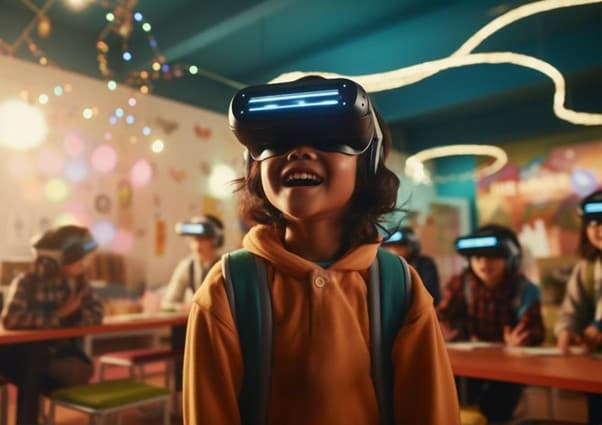
Augmented Reality in educationis emerging at a time when classrooms face challenges such as reduced student attention and limited hands-on learning. Learners look for experiences that feel immersive and relevant, while educators need tools that clarify complex concepts without increasing workload.
AR offers a powerful solution by supporting diverse learning styles and helping students grasp intricate concepts more intuitively. As adoption accelerates, an important question emerges: how are educators using AR to enrich learning? This blog explores the expanding role of Augmented Reality in education and training by examining its most impactful applications across the industry.
What Is Augmented Reality in Education?
Augmented Reality in education refers to the use of 3D overlays, digital simulations, and interactive virtual elements that enhance real-world learning environments. AR supplements, not replaces, the physical classroom. Students can view animated DNA structures above their textbooks, explore ancient civilizations across their desks, or practice clinical procedures with virtual overlays that respond to their movements.
Three Primary Types of AR Applications
Marker-based apps rely on a fixed image to activate enriched content, such as animations or video overlays.
Markerless apps interpret the surrounding environment to position digital elements in real time.
Location-based apps use GPS data to anchor experiences to the user’s physical position. Together, these forms of AR enable dynamic exploration of 3D models and layered information, creating more engaging lessons and elevating the overall quality of university learning.
Both VR and AR in educationbring concepts to life with immersion and interaction. Virtual Reality transports learners into fully virtual worlds, and AR improves what is already in front of them. Educators appreciate this distinction because AR supports collaborative, device-friendly learning without requiring specialized headsets.
How Is Augmented Reality Used in Education Today?
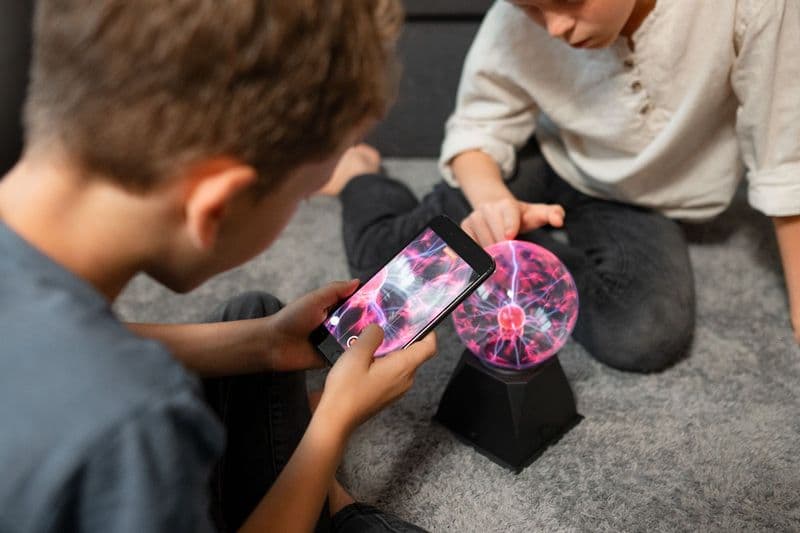
The applications ofAR in education and training are expanding rapidly, introducing fresh ways to enhance the learning experiences. Here are the most impactful AR applications in education, transforming traditional learning into immersive and interactive experiences.
Immersive Augmented Classrooms: AR-powered classrooms also strengthen STEM education by turning abstract scientific and mathematical ideas into vivid, interactive visuals. Google Lens enables real-time identification of plants, animals, objects, math problems, and text. It supports STEM, language learning, and everyday practical exploration. Ideal for demonstrating how AR supports self-paced, inquiry-driven learning.
Turning Abstract Concepts Into Interactive Reality: Subjects like physics, chemistry, math, and astronomy benefit from AR’s ability to turn theoretical ideas into tangible visualizations, helping learners deepen their conceptual understanding. Apps like SkyView let students point their device at the sky to identify stars, planets, satellites, and constellations.
Technical Education and Training: Engineering, vocational, and professional programs use AR for hands-on skill development. Students can practice complex procedures, machinery operations, or system workflows through safe, repeatable simulations.
Immersive Teaching Support for Educators: AR improves educator workflows by enabling visual demonstrations, guided modules, and scenario-based teaching tools that enrich classroom delivery and reduce preparation time.
Interactive Homework: Homework becomes more engaging when students can scan worksheets or textbooks to access animated explanations, step-by-step problem breakdowns, or interactive practice modules. Apps such as Google Expeditions allow students to continue interactive exploration at home, strengthening self-paced learning.
Simplifies Conceptual Breakdown: Educators use AR to break down intricate lessons into intuitive, layered visuals. This supports differentiated learning and helps students grasp multi-step processes with clarity.
Significant Uptick in Student Engagement: Interactive AR elements such as gesture-based exploration, object manipulation, and scenario-based learning capture attention and encourage active participation, resulting in higher engagement metrics. Tools like JigSpace and Merge Cube foster curiosity-driven exploration, helping students stay engaged for longer periods and improving active participation.
Inclusive Learning for Students With Disabilities (PwDs): AR tools provide alternative modes of interaction, such as visual prompts, audio cues, or tactile simulations, supporting diverse accessibility needs and personalized learning pathways.
On-Demand AR Learning Content: Students can access AR modules anytime, enabling self-paced study and reinforcing difficult topics through interactive practice without requiring constant teacher supervision.
Augmented Reality Applications in Education Across Subjects
AR in education broadens subject mastery by turning abstract ideas into clear, interactive experiences. Each discipline benefits from immersive formats that deepen understanding. Here are a few ways AR brings these advantages to life across subjects.
Augmented Reality in Science
Augmented Reality in science education transforms how students experience biology, chemistry, physics, and environmental science. Learners can rotate erupting volcanoes, visualize molecular bonds, or explore the human respiratory system with animated layers that respond to touch.
A powerful example of this transformation is Elements 4D, an AR tool that reimagines chemistry learning. The app uses simple, printable cubes representing elements from the periodic table. When viewed through a device, these cubes appear as interactive 3D elements that students can combine to observe real-time virtual reactions.
Augmented Reality in Nursing Education
Augmented Reality in nursing education reimagines clinical training. Students can practice procedures such as injections, wound care, and vital sign assessments through responsive AR overlays. Interactive patient avatars simulate realistic scenarios that offer repetition and mastery before hands-on practice.
A compelling example comes from an ICU study where nurses used HoloLens 2 and Microsoft Guides to learn ventilator and ECMO operation. AR projected step-by-step cues onto real equipment, helping trainees follow complex procedures with clarity and improving readiness for critical-care tasks.
Augmented Reality in Higher Education
Augmented Reality in higher education supports engineering design, architecture visualization, business simulations, and creative arts. College students benefit from dynamic 3D representations that complement advanced coursework.
Educational institutions and universities are utilizing immersive technology to elevate learning in fields such as medicine, engineering, and architecture. Through highly realistic simulations, students can interact with complex concepts more intuitively. This immersive approach makes advanced subjects easier to understand and apply.
Augmented Reality in History and Culture
History students can view ancient artifacts in 3D or explore battles, civilizations, and cultural landmarks through immersive visual storytelling. AR transforms static textbook moments into active journeys.
Museums and cultural organizations integrate AR experiences to deepen appreciation of heritage. For example, AR Tour’s Pompeii experience lets tourists view the ancient city’s reconstructed grandeur superimposed on today’s ruins, demonstrating the strong educational and commercial potential of AR in natural and cultural history.
Real-World Examples of Augmented Reality in Education
The five widely adopted AR applications that improve creativity, support language learning, enrich visual understanding, and bring historical and scientific concepts to life.
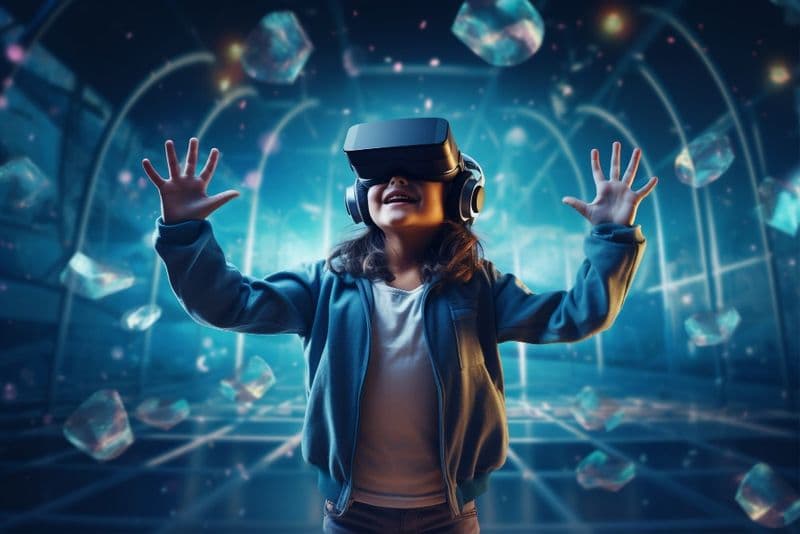
1. Google Translate
Google Translate’s AR feature detects printed text in the environment and instantly overlays the translated version on a phone screen. It’s a practical example of how AR supports real-time comprehension and makes multilingual content more accessible.
2. ABC AR – Space Discovery
ABC AR Space Discovery introduces children to astronomy through vivid, interactive 3D visuals. Learners explore planets, stars, and space concepts in a playful, curiosity-driven way. The app strengthens science learning by making complex ideas more visually approachable.
3. CoSpaces Edu
CoSpaces Edu enables learners to create their own interactive 3D worlds and view them through AR. Students place their digital models onto real surfaces or use tools like the MERGE Cube to explore them from multiple angles. This approach turns abstract ideas into hands-on, creative experiences.
4. Civilization AR
Civilization AR brings historical periods, artifacts, and museum collections to life through immersive AR storytelling. Students can explore ancient cultures, artworks, and archaeological sites as dynamic 3D scenes. Its detailed graphics and cross-device support create an enriched environment for historical discovery.
5. QuiverVision
QuiverVision transforms ordinary coloring pages into animated 3D scenes once scanned through the app. This interactive experience encourages young learners to experiment with color, design, and storytelling. Its educational versions have become widely adopted for engaging early-grade classrooms.
Benefits of Augmented Reality in Education
The benefits of Augmented Reality in education span cognitive, emotional, and experiential outcomes. Here are some key advantages of Augmented Reality in educationthat enhance engagement, understanding, and overall classroom effectiveness.
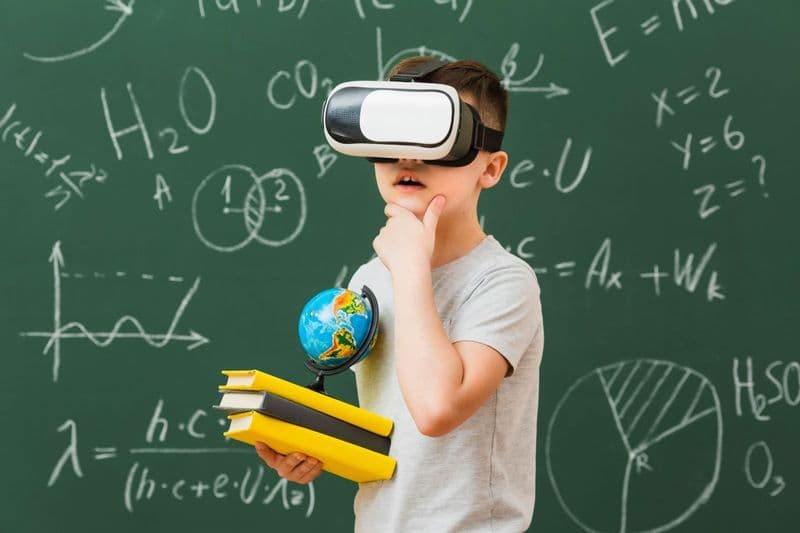
Personalized Learning: AR adapts content to individual learning needs. Students move at their own pace and revisit topics easily. It creates tailored learning experiences for every learner.
Improved Understanding & Retention: By converting abstract ideas into interactive 3D visuals, AR improves conceptual clarity and long-term memory. Research from ResearchGate shows that AR-based learning can improve retention rates by up to 30%, as learners process information through both visual and experiential cues.
Greater accessibility: AR offers alternative modes of interaction, from visual overlays to auditory cues, making learning more inclusive for students with diverse needs. It also removes geographical limitations, enabling learners to virtually explore cities, natural ecosystems, historical landmarks, and even outer space.
Reduces Costs: AR reduces reliance on expensive physical materials. A smartphone or tablet delivers rich, immersive lessons. Schools gain affordable access to advanced learning tools.
Gamification and motivation: AR integrates challenges, rewards, and progress tracking to make learning more interactive, motivating, and enjoyable while encouraging healthy student competition.
Improves Engagement: AR adds interactive, immersive elements that capture student attention. It blends digital content with real environments for lively learning. Lessons become more dynamic and visually stimulating. For instance, AR can enrich history lessons by letting students virtually explore iconic landmarks or experience major events through immersive 360-degree visuals.
Challenges of Adopting Augmented Reality in Education
Augmented Reality introduces powerful learning possibilities, but its implementation still requires schools to navigate practical, technical, and instructional constraints. Here are key challenges institutions must consider as they adopt AR in the classroom.
Key Challenges Include:
Device Accessibility: Not all students have consistent access to AR-capable smartphones or tablets, creating gaps in participation.
Infrastructure Requirements: Reliable internet, updated hardware, and sufficient classroom bandwidth are essential for smooth AR deployment.
Educator Training: Teachers need time and support to learn AR tools, integrate them into lessons, and troubleshoot classroom use.
Content Development: Creating high-quality AR modules requires design expertise, subject alignment, and ongoing updates as curricula evolve.
Classroom Management: Coordinating large groups of students using AR devices can be complex, especially in shared-device environments.
Cost of Implementation: While long-term costs decrease, initial investment in devices, software, and training can be significant for some institutions.
Student Distraction: Without structured guidance, immersive AR elements may shift focus away from learning objectives.
Technical Glitches: App compatibility issues, tracking errors, or calibration problems can interrupt lesson flow and impact learning outcomes.
The Future of Augmented Reality in Education
The future ofAR in educationis accelerating quickly, with Fact.MR projects the market to reach US$55.84 billion by 2033 at a powerful 32% CAGR, setting the stage for advanced, AI-driven AR experiences in classrooms. Future trends include:
Growth in Higher Education Adoption: Beyond K–12 classrooms, universities and colleges are expected to embrace AR for engineering simulation, medical training, business modeling, and research-based inquiry.
Standardized AR Curriculum Development: As AR becomes mainstream, educational bodies may introduce unified content frameworks and curriculum-aligned AR modules that can be used across institutions.
Wider Classroom Adoption: As educators continue to witness the impact of AR on engagement and learning outcomes, schools around the world are expected to integrate the technology more broadly into everyday instruction.
Industry-Academia Collaboration: As AR applications expand into real-world workflows, schools are likely to partner more closely with industry, enabling students to apply AR tools in authentic professional contexts.
Enhanced Accessibility for All Learners: Falling hardware costs and mobile-first AR tools will make immersive learning more accessible, supporting students with diverse needs, including those requiring visual, auditory, or adaptive support.
Deep Integration with AI and VR: AR will increasingly connect with AI-powered personalization and VR-based immersion, creating multidimensional learning environments that blend real and virtual worlds seamlessly.
Overall, AR’s trajectory in education points toward richer, more engaging, and increasingly personalized learning ecosystems, supported by continuous innovation and growing institutional adoption.
Ready to move beyond traditional ads? Use Flam to create immersive advertising experiences that capture attention and drive action.
Comments
Your comment has been submitted