Augmented Reality in Gaming: The Future of Play Has Finally Arrived
Augmented Reality (AR) is transforming the way we experience games, turning ordinary spaces into extraordinary virtual worlds. No longer confined to screens, games now interact with our environment, blending the digital and physical in ways we’ve never seen before. From global sensations like Pokémon GO and Jurassic World Alive to the rise of immersive AR-powered gaming consoles, the industry is stepping boldly into a new era of play.
In this blog, we'll explore how AR is reshaping the gaming landscape, its evolution, benefits, market growth, challenges, monetization models, and future trends.
What Is Augmented Reality in Gaming?
Augmented Reality in the gaming industry overlays digital elements, such as characters, objects, sounds, or effects, onto the real-world environment in real time. Instead of playing solely on a screen, players interact with a blended world where virtual elements appear to exist in their physical surroundings. Unlike Virtual Reality, which replaces the physical world, AR enhances it.
In AR games, your camera, sensors, and software work together to track your environment and place game elements within it. This creates a more immersive, interactive experience. Popular examples of Augmented Reality in the gaming industry include Pokémon GO, where creatures appear in real-world locations, and AR-based shooters and adventure games that transform your living room into a battlefield or a puzzle arena.
How AR Gaming Works: Technology and Components
AR gaming blends digital elements with the real world by using smart hardware and software that track the environment, understand movement, and project virtual objects seamlessly into physical spaces. Here are the key components that make this possible:
Camera: Captures the real-world environment, serving as the visual foundation for AR elements.
GPS, Gyroscope & Accelerometer: Track location, movement, and device orientation for accurate object placement.
AR Software/AR Engine: Processes environmental data, detects surfaces, and anchors virtual objects in place.
Depth Sensors/Surface Detection: Measure distances and identify flat surfaces to realistically position virtual elements.
Real-Time Rendering System: Renders 3D models and animations that blend seamlessly with the live camera feed.
Cloud Connectivity: Supports multiplayer features, data syncing, and loading of significant game assets.
AR-Compatible Hardware: Devices like smartphones, tablets, and AR glasses that enable AR gameplay.
How does it work?
Environment Capture: AR games rely on cameras and sensors to scan the real-world environment, capturing live visuals, movement, and surroundings to serve as the foundation for digital overlays.
Data Processing and Mapping: AR engines analyze the captured environment, detect surfaces, measure depth, and build a spatial map that allows virtual objects to interact realistically with physical spaces.
Object Placement & Tracking: Virtual elements are anchored to specific points in the mapped environment and continuously adjust their position and orientation as players move or change perspective.
Rendering and Display: The system renders 3D models, animations, and visual effects over the live camera feed, matching scale, lighting, and perspective to make them appear seamless and real.
User Interaction: Users interact with AR content through touch gestures, device motion, voice commands, or advanced hand tracking, enabling dynamic engagement with virtual objects in real time.
Evolution of AR in Gaming: From Early Apps to Advanced Systems
The evolution of Augmented Reality in the gaming industry has shifted dramatically over the past decade.
Early AR (2010–2015)
Early AR games relied on markers, such as printed images, to trigger digital overlays. These experiences were simple and limited by device capabilities.
Breakthrough AR (2016–2019)

The release of Pokémon GO in 2016 was a turning point. It leveraged GPS, mobile sensors, and real-world exploration to create an interactive AR gaming phenomenon. Niantic’s innovation demonstrated the commercial viability of large-scale AR. Following this, games like Jurassic World Alive and Harry Potter: Wizards Unite introduced more advanced tracking, real-time rendering, and multiplayer functionality.
Current Generation AR (2020–Present)
Today, AR gaming is moving toward high-end systems, including AR glasses, Mixed Reality headsets, and powerful game engines that support complex animations, realistic lighting, and hand tracking. These advancements enable more immersive storytelling, interactive environments, and gameplay that dynamically adapts to the player’s surroundings.
From experimental apps to fully integrated AR ecosystems, the evolution of AR in gaming demonstrates the industry’s commitment to creating experiences that are increasingly interactive, realistic, and socially connected.
Benefits of Augmented Reality in Gaming
Augmented Reality brings a fresh, dynamic layer to gaming, offering experiences that go far beyond traditional screen-based play. Let’s look at the benefits of AR in gaming:
1. Deep Immersion and Enhanced Engagement
AR transforms ordinary spaces into interactive playgrounds, making gameplay feel more lifelike and captivating. This level of immersive AR gaming keeps players emotionally invested and encourages longer play sessions.
2. Physical Movement and Active Gameplay
Unlike traditional games, AR encourages players to move, explore, and interact with their surroundings. Interactive AR gaming promotes activity, blending entertainment with physical engagement.
3. Personalized and Adaptive Experiences
Because AR responds to the player's environment, no two experiences are the same. Whether through mobile AR gaming or web-based platforms, games adapt to surroundings, light conditions, and player behavior, enhancing personalization.
4. Strong Social Interaction
AR brings players together in real-world spaces, enabling cooperative missions, shared challenges, and community-based events. This strengthens social bonds and makes gaming more collaborative and engaging.
5. Learning and Skill Development
AR games naturally build cognitive, strategic, and spatial skills. Through problem-solving and real-world interaction, players learn while they play, making AR ideal for educational and skill-based applications.
6. Learning and Skill Development
Many AR games encourage players to explore neighborhoods, landmarks, or new environments. This adds an extra layer of excitement and discovery, making the physical world a dynamic part of the gaming experience.
7. Increased Creativity
AR gives developers the freedom to merge storytelling, physics, and real-world interaction in new ways. Browser-based AR games and app-less AR gaming expand creative possibilities without being limited by app store constraints.
8. Expanded Market Potential
AR games appeal to a wide audience, including non-gamers, because they are intuitive, highly interactive, and easy to access through smartphones, creating opportunities for broader adoption and revenue growth.
Popular AR Game Types and Experiences
Augmented Reality in the gaming industry supports a broad range of game experiences that appeal to diverse audiences.
1. Location-Based AR Games
Players explore real-world locations to discover virtual assets. Pokémon GO and Harry Potter: Wizards Unite are popular examples.
2. Object-Based AR Games
These games recognize surfaces or objects and populate them with interactive digital elements, such as tabletop battles or board-game extensions. Some examples of object-based AR games are AR Dragon and Knightfall AR.
3. Physics-Based AR Games
These AR games use real-world movement and gestures to control virtual objects, creating more immersive, physics-driven interactions, such as Angry Birds AR: Isle of Pigs and Hot Lava AR.
4. Social and Multiplayer AR Experiences
These AR experiences let multiple players collaborate or compete in shared AR content in shared physical space, enabling hybrid digital-physical social play. Examples include Minecraft Earth and Space Pirate Trainer Arena.
5. Browser-Based and App-Less AR Gaming
These experiences load instantly in a web browser, allowing quick access for casual players and brand campaigns. Examples: Zappar WebAR Games and 8th Wall WebAR Games (such as Spider-Man WebAR experience and Kraken Hunt).
Major AR Gaming Success Stories
Several games have defined the Augmented Reality gaming landscape with large user bases and cultural impact.
Pokémon GO
Pokémon GO remains the most globally recognized AR game. It generated more than $1 billion in revenue annually for multiple years. Its location-based mechanics demonstrated how AR could scale globally.
Ingress
Ingress pioneered location-based AR gameplay, transforming real-world landmarks into strategic portals. Its global community, competitive missions, and innovative AR mechanics laid the foundation for future hits like Pokémon GO.
Minecraft Earth
Minecraft Earth allowed players to build life-sized AR creations and collaborate in shared spaces. Though discontinued, it showcased immersive multiplayer AR, creative world-building, and how digital objects can blend seamlessly with the real world.
Jurassic World Alive
Jurassic World Alive lets players collect and battle dinosaurs in real-world locations. With hybrid DNA creation, PvP battles, and AR exploration, it delivers an engaging, franchise-driven experience that merges gaming with reality.
The Walking Dead: Our World
This AR shooting game brings zombies into real-world surroundings. Players complete missions, fight undead in teams, and explore neighborhoods, combining survival gameplay, location-based AR, and social interaction for immersive experiences.
AR Gaming Market Growth and Industry Trends
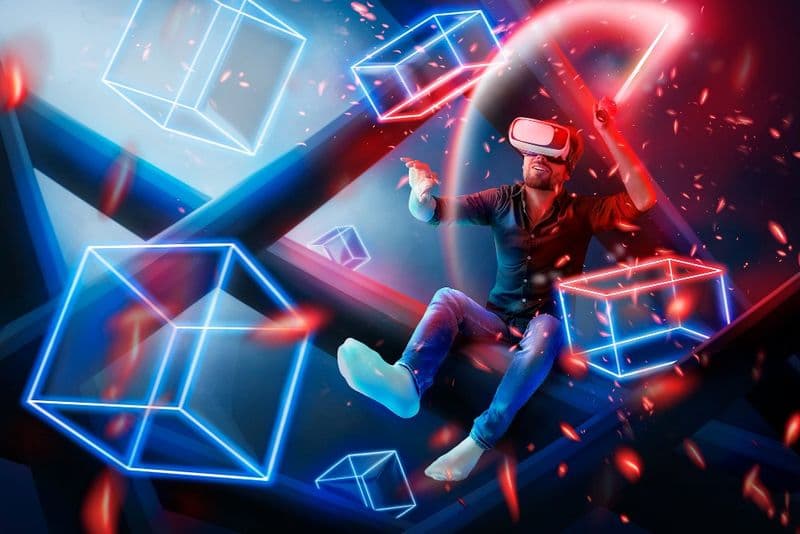
Augmented Reality in the gaming industry is experiencing sustained growth driven by advancements in mobile hardware, browser-based technologies, and consumer demand for immersive experiences. According to IMARC Group, the global AR gaming market is projected to surpass $141.7 billion by 2033.
This rapid growth of the AR gaming market is fueled by rising smartphone adoption, increasing 5G coverage, and investments from major technology companies. Developers are also shifting toward app-less AR gaming, reducing friction and expanding access.
Key Market Trends
1. Strong Market Growth & High Forecasted CAGR
The global AR gaming market was valued at roughly US$14.2 billion in 2024, and is projected to reach US$141.7 billion by 2033, reflecting a robust CAGR of about 25.9%.
2. Mobile AR Gaming Continues to Dominate
In 2024, mobile devices (smartphones/tablets) accounted for about 60% of the AR gaming market share, driven by widespread smartphone penetration and the availability of AR‑enabled hardware.
3. Rise of Smart Glasses and Wearable AR Devices
While mobile leads today, wearable AR hardware (smart glasses/head‑mounted displays) is forecast to grow at a 28% CAGR through 2030, indicating a shift in the device mix.
4. 5G, Cloud & Network Advances Enable Richer AR Experiences
The rollout of 5G and edge‑computing infrastructure is enabling smoother, low‑latency AR gameplay, especially for real-time multiplayer or cloud‑based AR.
5. Diversifying Monetization Models (Beyond In‑App Purchases)
Currently, in‑app purchases remain a major revenue source. Still, newer models, such as cloud‑anchored services, persistent-world subscriptions, and play‑to‑earn/NFT‑linked mechanics, are gaining traction at a 35% CAGR.
6. Hardware Accessibility & Lower Entry Barriers for Players
Advancements in smartphone processors, sensors (such as cameras, GPS, and gyroscopes), and cheaper hardware make AR gaming more accessible than ever, even for casual players.
App-Less AR Driving The Next Wave of Gaming Accessibility
App‑less AR gaming, also known as WebAR, allows players to access Augmented Reality experiences directly through a web browser without downloading a dedicated app. This approach removes traditional barriers such as storage limitations, app compatibility, and installation time, making AR games instantly accessible to a wider audience. By simply scanning a QR code or clicking a link, users can jump straight into interactive AR gameplay.
It enables instant access, broad device compatibility, and smoother onboarding, which increases player engagement and retention. Casual and first-time gamers can enjoy AR experiences without commitment, while developers gain flexibility to deploy content quickly across multiple platforms. This friction-free approach is driving the next wave of AR gaming accessibility, opening doors to global reach and mainstream adoption.
Monetization Models in AR Gaming
The AR gaming business model continues to evolve as developers experiment with new revenue streams. Because Augmented Reality in the gaming industry blends physical and digital interaction, monetization strategies often focus on user behavior, location-based play, and immersive engagement.
Key AR Game Monetization Strategies
In-App Purchases
Cosmetics, power-ups, character upgrades, and virtual items remain core revenue drivers. Successful AR titles use progression-based incentives to motivate in-app purchases.
2. Location-Based Advertising and Sponsorships
Brands partner with AR games to promote real-world venues. Pokémon GO’s sponsored locations model illustrates the scalability of this format. According to data from Niantic’s public reports, location-based ads increase foot traffic and conversions.
3. Subscription Models
Some immersive AR gaming platforms offer premium tiers with exclusive features, faster progression, or access to special missions.
4. Season Passes and Events
Live events encourage recurring spending by tying digital rewards to limited-time challenges or real-world exploration.
5. App-Less AR Campaign Monetization
Browser-based AR games enable brand activations, product promotions, and retail engagement without app downloads. This model is growing rapidly in advertising and entertainment.
These strategies show how AR developers can generate sustained revenue while enhancing the player experience.
Challenges in AR Gaming Development
While the Augmented Reality in the gaming industry is expanding, developers face several technical, operational, and creative challenges.
1. Device Fragmentation
Different smartphones, sensors, and browsers cause performance inconsistencies. Ensuring smooth gameplay across devices requires extensive testing.
2. Environmental and Contextual Challenges
AR games rely on real-world conditions like lighting and space. Variations in the environment can impact game performance, making it difficult to maintain consistency across different settings.
3. High Production Costs
Advanced AR game development often requires 3D assets, animation, spatial mapping, and AI-driven interactions, raising production budgets.
4. Data Privacy and Safety
AR games require access to sensitive data, such as camera and location info, raising concerns about privacy and data security. Developers must follow strict privacy guidelines to maintain user trust.
5. User Experience and Interaction Design
Creating intuitive interfaces that seamlessly blend the real and digital worlds is challenging. Poor design can result in frustrating experiences and drive users away from the game.
6. Limited AR Content and Interoperability
Many AR games are tied to specific platforms (iOS or Android) or AR technologies, limiting their reach. A lack of universal standards hinders cross-platform compatibility and content accessibility.
Opportunities and Future Trends in AR Gaming
As AR technology evolves, the gaming industry has several emerging opportunities that could reshape user engagement.
1. Expanding Beyond Mobile
While mobile AR gaming has been the dominant force, wearable devices like Microsoft HoloLens and upcoming Apple AR glasses are paving the way for more immersive, hands-free experiences. These devices promise to integrate AR seamlessly into everyday life, enhancing gaming interactions with deeper immersion and more natural user engagement.
2. AR in Esports and Competitive Gaming
AR integration in esports is set to revolutionize the competitive gaming scene, offering more interactive and immersive events. By combining physical arenas with virtual elements, AR will transform live tournaments, enhancing both player experience and spectator engagement.
3. Integration of AI and Machine Learning
AI and machine learning are making AR games smarter and more dynamic, enabling adaptive gameplay that evolves based on player behavior. This integration enables personalized experiences, with the game’s environment, difficulty, and objectives adjusting in real time to keep players engaged.
4. Social and Multiplayer Experiences
AR is moving beyond solo gaming, with an emphasis on shared multiplayer environments where players can interact in the same physical space. This social aspect allows for more cooperative and competitive experiences, enhancing engagement by blending the virtual world with real-world social dynamics.
5. AR in Education and Training
AR gaming is increasingly being used in education and professional training, offering interactive learning experiences that are both engaging and practical. By simulating real-world scenarios, AR can improve retention and skills development across fields such as medicine, engineering, and aviation.
6. Mixed Reality
Mixed Reality (MR) combines AR and VR, enabling digital content to interact with the real world in real time. This evolving technology is poised to deliver a truly immersive gaming experience, enabling players to physically manipulate virtual objects within their environment.
7. Growth of App-Less and Web-Based AR
App-less AR (or WebAR) is gaining traction by eliminating the need for app downloads, enabling instant access in web browsers. This trend makes AR gaming more accessible and lowers entry barriers, enabling players to engage with games quickly without the hassle of installation.
8. Cross-Industry Collaboration
As AR technology matures, cross-industry collaboration is becoming more common, with gaming companies partnering with sectors such as retail, advertising, and healthcare. This convergence enables new, innovative experiences in which gaming, commerce, and education seamlessly integrate into daily life.
Conclusion
Augmented Reality in the gaming industry is redefining how players interact with digital worlds by turning everyday environments into dynamic playgrounds. With advancements in AI, spatial computing, and app-less delivery, AR gaming is becoming more accessible, immersive, and commercially viable. As developers explore new technologies and monetization models, AR will continue to shape the future of interactive entertainment, creating deeper, more engaging experiences for players.
What if your ads could be a game in themselves? Make your campaigns as engaging as the games you create with Flam's Mixed Reality advertising. Transform your ads into interactive experiences that captivate users and keep them coming back for more.
Comments
Your comment has been submitted