How Augmented Reality in Transportation is Transforming Vehicles, Transit, and Logistics
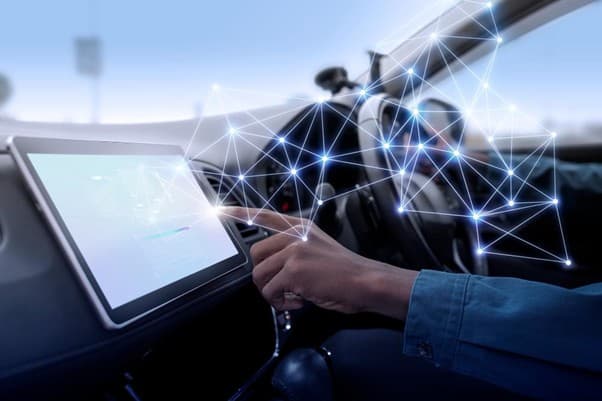
The transportation system is evolving toward intelligence, automation, and real-time responsiveness. Cities, vehicle manufacturers, and logistics providers are investing in digital tools to improve safety, efficiency, and user experience. Augmented Reality in transportation is emerging as a critical layer in this transformation. By overlaying digital information onto real-world environments, AR bridges the gap between physical infrastructure and intelligent systems.
In this article, we will explore how Augmented Reality in transportation works, where it is currently applied, and how it is shaping the future of smart mobility across vehicles, public transit, and logistics.
What Is Augmented Reality in Transportation?
Augmented Reality in transportation refers to the use of AR technologies to overlay contextual digital information, such as graphics, data, or instructions, superimposed onto the real-world environment to enhance how people navigate, operate, and manage transportation systems. This information is displayed on devices such as heads-up displays, smartphones, or AR glasses. It allows users to view critical data without taking their eyes off their surroundings.
The immersive technology improves safety and efficiency across road, rail, air, and maritime transportation. Drivers and operators receive real-time guidance, alerts, and visual cues directly in their field of view. AR is also widely used in vehicle maintenance and infrastructure management. Technicians can view step-by-step instructions and system data overlaid on physical equipment. This speeds up repairs and improves accuracy.
Why AR Matters in Modern Transportation and Mobility?
Transportation environments are complex, fast-moving, and data-intensive. Traditional dashboards and screens often fail to deliver information at the right moment. Augmented Reality mobility systems solve this by embedding insights directly into the user’s field of view. Drivers, operators, and passengers receive guidance without distraction.
Key drivers for adoption include increasing traffic congestion, safety mandates, labor shortages, and the push toward smart transportation infrastructure. AR also supports Vision Zero initiatives by improving situational awareness and reducing human error.
How AR Works in Transportation Systems and Interfaces?
Augmented Reality in transportation blends digital intelligence with the physical environment to deliver contextual, real-time insights across vehicles, infrastructure, and mobility platforms. It operates through a coordinated pipeline of sensing, data processing, and visual delivery.
Sensing: AR transportation solutions collect data from cameras, LiDAR, GPS, and IoT sensors to understand surroundings, vehicle position, traffic conditions, and environmental changes.
Tracking: Advanced tracking aligns digital content accurately by continuously monitoring vehicle movement, road geometry, objects, and user perspective in dynamic transportation environments.
Processing and Recognition: AI-powered algorithms analyze sensor data to recognize lanes, vehicles, signage, pedestrians, equipment faults, and transit assets in real time.
Rendering: The system generates 3D visuals, symbols, and contextual overlays optimized for clarity, safety, and minimal distraction during mobility interactions.
Display: Information appears through heads-up displays, mobile devices, smart glasses, or vehicle dashboards, enabling seamless human–machine interaction.
Key Interfaces:
AR in smart transportation relies on multiple interface types to ensure accessibility, safety, and scalability across vehicles, public transit, and logistics environments.
Head-Up Displays (HUDs): Project navigation cues, hazard alerts, and speed data directly onto the windshield, reducing cognitive load and supporting AR driver-assistance use cases.
In-Vehicle Infotainment Screens: Central dashboards display AR navigation, diagnostics, and route-optimization insights without requiring additional hardware or user training.
Mobile Device Interfaces: Smartphones and tablets power app-based and app-less AR, enabling Augmented Reality in public transport and pedestrian navigation at scale.
Wearable Displays: Smart glasses support Augmented Reality in logistics, vehicle maintenance, and workforce training by offering hands-free, task-specific visual guidance.
Projection-Based Interfaces: AR projections on roads, depots, or warehouse floors guide movement, parking, or loading operations in complex transportation environments.
Web-Based AR Platforms: Browser-based AR enables rapid deployment of Augmented Reality mobility systems without downloads, improving accessibility for passengers and transport authorities.
Key Use Cases of AR in Transportation
1. Navigation and Real-Time Route Guidance
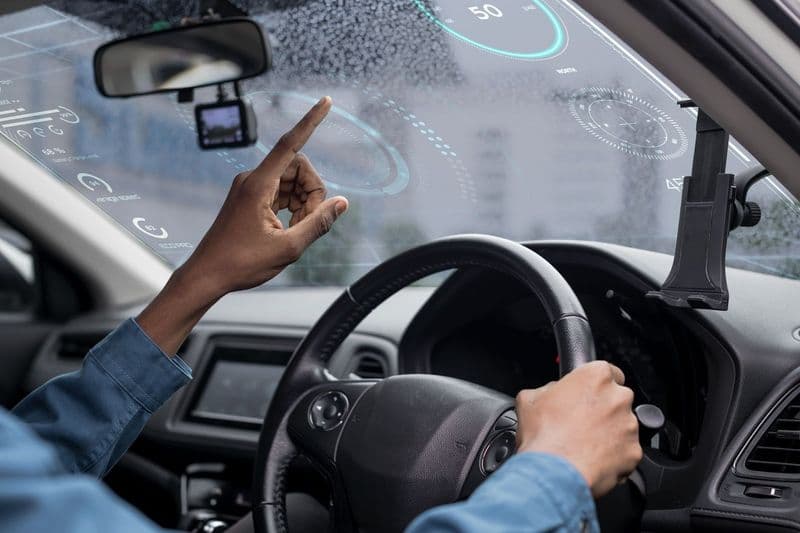
AR navigation systems project turn-by-turn directions directly onto roads or sidewalks. Visual cues reduce cognitive load and improve wayfinding accuracy. These systems are particularly effective in urban areas, airports, and complex interchanges where traditional maps fall short.
2. Driver Assistance and Safety Overlays
AR driver assistance systems display speed limits, collision warnings, pedestrian alerts, and lane guidance in the driver’s line of sight. Automakers are integrating AR into heads-up displays to reduce reaction time and improve situational awareness without diverting attention.
3. Vehicle Maintenance and Diagnostics
AR for vehicle maintenance enables technicians to visualize engine components, diagnostics, and repair instructions in real time. This reduces service time, minimizes errors, and supports remote expert assistance for fleet and transit operators.
4. Public Transit Information Systems
Augmented Reality in public transport improves passenger experience by overlaying arrival times, platform directions, and service alerts within stations. Transit agencies use AR to reduce confusion, improve accessibility, and increase rider satisfaction in high-traffic environments.
5. Logistics, Warehousing, and Fleet Operations
Augmented Reality in logistics supports picking, routing, and asset tracking through visual guidance and real-time data overlays. Fleet managers deploy AR fleet management tools to optimize loading, vehicle inspections, and route compliance.
6. AR for Pedestrian and Passenger Experience
AR enhances pedestrian navigation, crosswalk safety alerts, and multimodal trip planning. Passengers benefit from contextual information layered onto streets, stations, and vehicles, improving trust and usability across mobility systems.
Benefits of AR for Passengers, Operators, and Transport Authorities
Augmented Reality in transportation creates measurable value across all stakeholders by improving safety, efficiency, and user experience within mobility systems. Let’s have a look at the key benefits of AR in smart transportation:
For Passengers
Improved Navigation Clarity: AR navigation systems display intuitive, real-world directions, reducing confusion in unfamiliar routes and crowded transit environments.
Enhanced Travel Safety: Real-time AR alerts inform passengers about hazards, platform changes, and traffic conditions, improving overall situational awareness.
Reduced Travel Stress: Clear visual guidance minimizes uncertainty during transfers, delays, and route changes, creating a smoother travel experience.
Greater Accessibility: AR mobility systems support visually guided assistance for elderly passengers and people with disabilities.
Real-Time Information Access: Passengers receive live updates on schedules, delays, and connections without relying on static displays or announcements.
For Operators
Improved Operational Efficiency: AR transportation solutions streamline workflows by providing real-time instructions and data overlays to drivers and staff.
Reduced Training Time: AR-based guidance accelerates onboarding by offering hands-on, visual training without disrupting live operations.
Lower Maintenance Costs: AR for vehicle maintenance reduces diagnostic errors and speeds up repairs, minimizing vehicle downtime.
Enhanced Driver Performance: AR driver assistance improves awareness, reduces fatigue, and supports safer driving behavior.
Optimized Fleet Management: AR fleet management tools provide visual insights into vehicle status, routes, and compliance metrics.
Data-Driven Decision Making: Integrated AR systems deliver actionable insights, improving scheduling, resource allocation, and service reliability.
For Transport Authorities
Improved Public Safety Outcomes: AR in smart transportation supports proactive hazard communication and real-time incident management.
Better Infrastructure Utilization: Visual analytics help authorities monitor traffic flow, congestion patterns, and asset usage more effectively.
Enhanced Public Communication: Augmented Reality in public transport enables clear, consistent messaging during disruptions or emergencies.
Support for Smart City Initiatives: AR mobility systems align with digital transformation goals and intelligent transportation strategies.
Reduced Operational Costs: Automation and visual guidance lower dependency on manual processes and on-ground personnel.
Higher Passenger Satisfaction Scores: Improved navigation, safety, and information access lead to better public perception and service adoption.
AR Transportation Market Growth and Industry Trends
The market for Augmented Reality (AR) in transportation and related sectors is growing rapidly as technology adoption accelerates. The automotive AR market, a key part of transportation, is projected to grow from USD 8.22 billion in 2025 to about USD 24.33 billion by 2030, at a CAGR of around 24.2%.
Specialized segments like AR navigation are expanding even faster; the AR navigation market was valued at about USD 1.62 billion in 2024 and is forecast to reach roughly USD 11.69 billion by 2030, at a CAGR of over 39%. Similarly, traffic digital-twin AR displays used in smart traffic management are expected to grow from USD 1.03 billion in 2024 to approximately USD 2.87 billion by 2029, at a CAGR of about 22.6%.
These growth trends highlight the rising adoption of AR-driven, smarter, safer, and more connected transportation systems, fueled by investments in ADAS, smart city infrastructure, and real-time navigation solutions.
AR for Driver and Workforce Training Programs
Augmented Reality is transforming driver and workforce training programs by delivering immersive, hands-on learning without real-world risk. Through AR driver assistance, trainees can practice navigation, hazard detection, and safety procedures using real-time digital overlays in realistic driving scenarios.
AR is also widely applied in AR for vehicle maintenance, where technicians receive step-by-step visual guidance, component identification, and diagnostics overlaid on physical vehicles. These AR-driven training programs improve skill retention, reduce errors, and enhance overall safety and efficiency across transportation operations.
App-Less AR: Making Transportation Use Cases Accessible at Scale
App-less AR removes friction from deployment by eliminating downloads and device constraints. This approach is critical for the integration of Augmented Reality in mobility systems operating in public and enterprise environments.
QR codes, web-based AR, and camera-based triggers allow instant access to navigation, alerts, and operational data. App-less delivery expands reach across passengers, drivers, and field workers.
For large transit systems and logistics hubs, app-less AR supports faster rollout and lower maintenance costs. This model is becoming essential in AR for smart transportation strategies.
Real-World Examples of AR in Vehicles, Public Transit, and Logistics
Automotive manufacturers, transit agencies, and logistics providers worldwide are deploying AR transportation solutions to enhance safety, efficiency, and the user experience. Let’s look at some real-world examples of the use of AR in transportation:
AR in Vehicles and Automotive Systems
BMW iX AR Navigation
BMW's iX model uses Basemark's video AR on the central display, overlaying turn directions on live camera feeds to guide drivers precisely and minimize distractions.
Mercedes-Benz AR HUD
Mercedes-Benz integrates AR heads-up displays into models such as the E-Class, projecting lane markings, traffic signs, and pedestrian alerts directly onto the windshield to enhance safety at night.
Audi Virtual Cockpit AR
Audi's AR-enhanced virtual cockpit highlights hazards and navigation cues in the driver's view, tested in e-tron models to improve reaction times during urban travel.
AR in Public Transit Systems
European City Bus AR App
A European transit authority overlays real-time bus schedules and routes on smartphone cameras pointed at stops, aiding tourists with instant visual info.
Nancy, France AR Guidance
Keolis in Nancy uses QR-code AR on smartphones to guide passengers to temporary bus stops during tram works, showing real-time paths and distances.
New York Subway AR Visualization
NYC subway apps use AR to project route and platform information onto the user's view, simplifying navigation in complex underground stations.
AR in Logistics, Warehousing, and Fleet Operations
DHL Smart Glasses Pilot
DHL's Netherlands warehouse tested Ricoh/Ubimax AR glasses, boosting picking efficiency by 25% through visual order cues and error reduction.
BMW Logistics AR Savings
BMW applied AR for warehouse picking, achieving 22% time savings and 33% fewer errors over shifts via overlaid instructions.
XPO Logistics Diagrams
XPO uses AR glasses to display package diagrams in workers' fields of view, speeding up accurate handling in high-volume facilities.
Key Metrics to Measure AR Impact in Transportation Systems
Measuring success is critical for scaling Augmented Reality in transportation initiatives.
Navigation Accuracy Improvement: Tracks reductions in missed turns, reroutes, and navigation-related delays.
Safety Incident Reduction: Measures decrease in collisions, near misses, and pedestrian-related incidents.
Operational Time Savings: Assesses task completion speed improvements for maintenance, logistics, and inspections.
Training Effectiveness: Compares training duration, retention rates, and error reduction using AR-based programs.
User Adoption Rates: Monitors passenger, driver, and workforce engagement with AR transportation solutions.
Maintenance Downtime Reduction: Evaluates faster diagnostics and repair cycles enabled by AR for vehicle maintenance.
Cost Efficiency Gains: Analyzes ROI through reduced fuel usage, labor costs, and operational inefficiencies.
Challenges in Adopting AR in Transportation & How to Overcome Them
While Augmented Reality in transportation delivers measurable value, implementation at scale presents technical, operational, and organizational challenges. Addressing these early ensures sustainable adoption and long-term ROI.
High Implementation and Integration Costs
AR in smart transportation often requires investments in software, data integration, and interface design across legacy transportation systems.
How to overcome it: Transportation agencies can start with pilot programs using mobile-based or appless AR to reduce upfront hardware and deployment costs. The U.S. Department of Transportation encourages phased adoption of technology to manage risk and expense.
Hardware Dependency and Device Fragmentation
Some Augmented Reality mobility systems rely on specialized hardware, such as AR headsets or in-vehicle displays, which limits scalability.
How to overcome it: Prioritize smartphone- and web-based AR navigation systems that work across devices to improve accessibility and reduce reliance on hardware.
Data Accuracy and Real-Time Reliability
AR driver assistance and navigation overlays depend on precise, real-time data from GPS, sensors, and mapping platforms.
How to overcome it: Integrate AR systems with validated geospatial data, IoT sensors, and cloud-based processing to ensure consistent accuracy. Federal guidance on intelligent transportation systems highlights data validation best practices.
Safety, Distraction, and Human Factors
Poorly designed AR interfaces can distract drivers or overwhelm users with excessive visual information.
How to overcome it: Adopt human-centered design standards and limit AR overlays to context-aware, safety-critical information. The National Highway Traffic Safety Administration emphasizes minimizing cognitive load in driver-assistance technologies.
Workforce Training and Adoption Resistance
Operators and field staff may resist AR fleet management tools due to unfamiliar workflows or a lack of training.
How to overcome it: Introduce AR gradually through training and maintenance use cases, demonstrating productivity gains. The Federal Transit Administration supports digital upskilling for transportation workforces.
Privacy, Security, and Compliance Concerns
Augmented Reality in public transport often processes location, vehicle, and passenger data, raising privacy and cybersecurity risks.
How to overcome it: Implement strong data governance, encryption, and compliance with U.S. privacy frameworks. Guidance from the Cybersecurity and Infrastructure Security Agency outlines the secure deployment of emerging transportation technologies.
Future of AR-Driven Transportation and Mobility Innovation
Augmented Reality in transportation will increasingly converge with AI, IoT, and 5G to enable predictive, context-aware mobility experiences. Real-time data fusion will allow AR navigation systems, safety overlays, and operational dashboards to adapt instantly to traffic, weather, and infrastructure conditions.
In the long term, the future of Augmented Reality in mobility points toward fully immersive, app-less experiences embedded across vehicles, transit hubs, and logistics networks. As standards mature, AR transportation solutions will become core digital infrastructure supporting safer, more efficient, and user-centric transportation systems.
Conclusion
Augmented Reality in transportation is transforming how people move, work, and interact with mobility systems. From navigation to training and logistics, AR improves safety, efficiency, and experience. As adoption accelerates, scalable and app-less platforms will define success. Transportation leaders who invest early will shape the future of connected mobility.
Turn advertising into interactive moments with Flam. Create AI-powered, app-less advertising experiences that engage audiences in real time, turning passive attention into meaningful interaction.
Comments
Your comment has been submitted