The Ultimate Guide to Mixed Reality: The Future of Immersion
Mixed Reality (MR) is reshaping how people interact with digital information, blending physical environments with virtual elements that respond in real time. As technology becomes more intuitive and immersive, understanding what Mixed Reality is has become essential for anyone curious about the future of human–computer interaction.
This article explains the fundamentals of MR, how it works, key business benefits, real-world applications, and how companies can deploy scalable app-less MR experiences.
What Is Mixed Reality (MR)?
Mixed Reality (MR) is a technology that blends physical environments with interactive digital content in real time. It allows users to see, understand, and engage with virtual objects that behave as if they were real.
MR exists between Augmented Reality (AR) and Virtual Reality (VR). Unlike Virtual Reality (VR), which immerses users entirely in a digital space, or Augmented Reality (AR), which overlays digital elements onto the real world, MR anchors digital objects to the real world and enables real-time interaction.
MR experiences can range from exploring 3D holograms and interacting with virtual characters to navigating immersive environments, all while remaining aware of the surrounding physical space. This fusion of reality and digital content creates highly engaging, interactive, and often multi-sensory experiences that are transforming entertainment, education, advertising, and beyond.
AR vs. VR vs. MR: Key Differences
Although AR, VR, and MR are often mentioned together, each technology offers a fundamentally different way of blending the digital and physical worlds. Understanding these differences is key to appreciating where Mixed Reality fits in the immersive-technology spectrum.
Augmented Reality
AR overlays digital content onto the real world, allowing users to see virtual elements while still viewing their physical surroundings. It’s typically experienced through smartphones, tablets, or lightweight AR glasses. AR is great for enhancing real-world tasks with quick, contextual information.
Key characteristics of AR:
The real world remains the primary environment
Digital content is overlaid but not fully anchored
Interaction is typically limited (tap, drag, rotate)
Runs on smartphones, tablets, and AR glasses
Examples: Pokémon GO, IKEA Place, Google Lens, smartphone-based AR filters. AR is ideal when you want to provide contextual information without isolating the user.
Virtual Reality (VR)
VR immerses users in a completely artificial environment, blocking out the physical world altogether. Wearing a VR headset transports you into a 360° virtual space, whether in a game, a training simulation, or a virtual meeting room.
Key characteristics of VR:
The physical world is entirely replaced
Highly immersive sensory experience (visual, audio, sometimes haptics)
Interaction occurs only with virtual objects
Requires a VR headset and controllers
Examples: Meta Quest experiences, VR training simulators, VR gaming worlds. VR excels when full immersion is needed, such as gaming, soft-skills training, or virtual prototyping.
Mixed Reality (MR): The Best of Both Worlds
Mixed Reality blends digital and physical environments so they interact in real time. Unlike AR, MR isn’t an overlay; it anchors virtual objects to the real world, responds to physics, and can be manipulated as if they truly exist in your environment. MR sits on a spectrum between AR and VR, but it introduces deeper spatial understanding and interactivity.
Key characteristics of MR:
Digital objects are aware of and responsive to the real world
Users can interact with both physical and virtual elements
Requires advanced sensors, spatial mapping, and sometimes hand-tracking
Uses MR headsets or passthrough-capable VR devices
Examples: Microsoft HoloLens, Magic Leap, Apple Vision Pro (in immersive passthrough), and advanced industrial training tools.
MR is well-suited to scenarios where digital and physical elements must coexist, such as remote assistance, manufacturing workflows, medical visualization, and collaborative design.
Feature | AR | VR | MR |
View of Real World | See the real world | Fully blocked | Integrated with digital content |
Level of Immersion | Low–Medium | High | Medium–High |
Interaction | Limited | Full (virtual only) | Full (virtual + physical) |
Hardware | Smartphones, AR glasses | VR headsets | MR headsets/passthrough VR |
Digital Objects Anchored to Reality | Sometimes | No | Yes |
Ideal Use Cases | Navigation, retail, education | Gaming, simulation, training | Industrial workflows, design, and collaboration |
How Mixed Reality Works?
MR relies on advanced hardware and software to analyze real environments and integrate interactive virtual content. It uses several core technologies:
1. Sensor Input & Sensor Fusion
Mixed Reality devices collect data from multiple sensors, such as cameras, IMUs, depth sensors, and, in some cases, LiDAR. Sensor fusion combines these data streams to create a unified and accurate understanding of motion, depth, and the surrounding environment.
2. Spatial Mapping/Environment Understanding
Using the fused sensor data, the system generates a 3D map of the environment, identifying surfaces, boundaries, and obstacles. This spatial understanding enables virtual objects to be realistically placed on floors, tables, or walls.
3. Tracking
MR relies on SLAM (Simultaneous Localization and Mapping) to track device position in real time. Additional tracking, such as hand, head, and object tracking, enables natural interaction and precise alignment between the user and digital elements.
4. 3D Rendering & Scene Understanding
The device renders virtual objects in real time, adjusting lighting, occlusion, and perspective so digital elements appear anchored and believable. Scene understanding ensures these objects behave appropriately within the mapped environment.
5. Interaction
Users interact with MR content through intuitive inputs such as hand gestures, voice commands, or simple taps and pinches. These natural interaction methods make virtual objects feel more responsive and lifelike.
6. Blending / Composition
The system blends the rendered virtual elements with the real-world view, ensuring proper depth, occlusion, and transparency. This compositional step is what makes digital objects appear integrated into the real environment rather than floating on top of it.
7. Display
Finally, the combined real-and-virtual scene is shown to the user through optical see-through lenses or passthrough video displays. High-resolution, low-latency displays are crucial for maintaining realism and preventing motion discomfort.
Types of Mixed Reality Experiences
Mixed Reality spans a wide range of experiences, from lightly integrated digital overlays to fully interactive hybrid environments. Immersive Mixed Reality experiences differ based on how deeply digital content is anchored to the real world and how users interact with it.
1. Physical Interaction-Based MR Experiences
These experiences emphasize how users physically interact with digital objects within real-world space.
Direct Hand Interaction: Users grab, push, rotate, or stretch holograms using natural gestures.
Object-Aware Interaction: Virtual objects respond to real surfaces, like colliding, sticking, or hiding behind physical elements.
Spatial Movement: Users walk around, lean in, or change perspective to explore anchored 3D content.
2. UI & Content-Based MR Experiences
These experiences focus on how digital content is presented and how interfaces blend into the physical world.
Holographic Interfaces: Buttons, dashboards, and panels floating in space around the user.
Contextual Overlays: Labels, instructions, or data visualizations attached to real objects.
Spatial Narrative Content: Characters, scenes, or storytelling elements that unfold throughout the user’s environment.
3. Engagement-Based MR Experiences
These experiences are defined by how deeply users participate, collaborate, or interact in mixed environments.
Single-User Immersion: Independent exploration or manipulation of holographic content.
Collaborative MR: Multiple users share the same holographic workspace and co-edit or train together.
Task/Gamified Workflows: Experiences designed with goals, challenges, or feedback loops to sustain engagement.
4. Context-Aware & Adaptive MR Experiences
These experiences adapt to the user’s environment, situation, or behavior.
Environment-Adaptive MR: Content reacts to room size, lighting, or obstacles.
Real-World Triggered Interactions: Digital elements appear or change based on location or objects in view.
Behavior-Adaptive Experiences: The system tailors holograms based on the user’s actions or progress.
Benefits of Mixed Reality for Businesses
Mixed Reality supports measurable outcomes across the enterprise, making it a strategic investment in business.
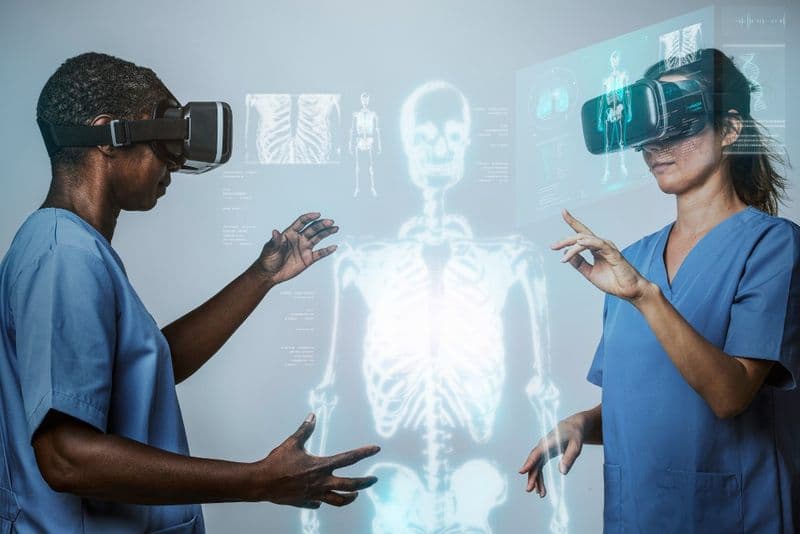
Enhanced training & skill development: MR enables realistic, hands-on training without physical risks or equipment costs, allowing employees to practice complex tasks safely, repeatedly, and more effectively.
Improved remote collaboration: Teams can interact with shared 3D models and annotations in real time, making communication clearer, reducing misunderstandings, and accelerating decision-making across locations.
Faster design & prototyping: Mixed Reality lets designers visualize, test, and adjust prototypes virtually, reducing development cycles, minimizing errors, and saving time on physical iterations.
Increased operational efficiency: Technicians can access step-by-step holographic instructions directly in their environment, reducing mistakes, improving workflow accuracy, and speeding up maintenance or assembly tasks.
Reduced training & operational costs: Organizations cut costs by replacing physical prototypes, travel for training, and equipment-intensive learning with scalable, repeatable MR-based simulations and guidance.
Better customer experience: MR offers immersive demonstrations, interactive product visualizations, and personalized experiences, helping customers understand offerings better and increasing engagement and conversion rates.
Enhanced safety & risk management: Simulating hazardous scenarios in MR helps employees practice safely, identify risks earlier, and follow proper procedures without exposure to real-world dangers.
Industry Use Cases of MR
Mixed Reality is being adopted across many fields, where interactive 3D content helps people better understand information and complete tasks more efficiently. These Mixed Reality examples show how MR blends digital elements with real environments to create practical, engaging experiences.
Retail and E-commerce
Retailers use MR to help shoppers visualize products in their homes, compare sizes, and explore features in 3D. Customers can place furniture in a room, rotate gadgets, or preview clothing through anchored MR overlays. These experiences make shopping easier and more interactive.
Education and Training
MR brings lessons to life by allowing students to interact with 3D models, science simulations, and historical environments. Teachers use MR to explain complex ideas through hands-on exploration. Training programs also benefit from MR walkthroughs, where learners practice real-world tasks with digital guidance layered onto physical spaces.
Healthcare
Healthcare professionals use MR to study anatomy, visualize medical procedures, and plan treatments. MR overlays help surgeons understand structures before operations, while students interact with 3D organs and systems. This blend of real-world context and digital detail makes learning and planning more accurate.
Manufacturing
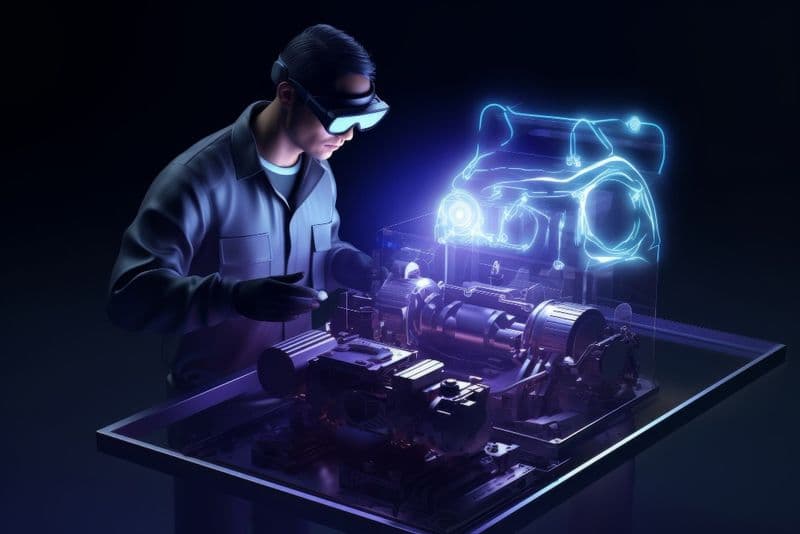
MR assists technicians by showing step-by-step instructions directly on machinery and equipment. Workers can see digital markers indicating where parts fit or how components should move. This reduces errors and improves efficiency, especially in complex assembly tasks.
Construction and Architecture
Architects and builders use MR to preview designs inside actual spaces. They can walk through life-size 3D models, inspect structural elements, and compare plans with the physical site. This helps teams identify issues early and communicate designs clearly.
Gaming and Entertainment
MR makes games more immersive by blending characters, objects, and effects into real environments. Players can interact with 3D elements on their floors, walls, or outdoor spaces. Entertainment events also use MR to create animated scenes that appear to unfold before the audience.
Marketing and Advertising
Brands use MR to create interactive storytelling moments that appear in the real world. Users can scan a code to unlock campaigns, animations, or product demos anchored to their surroundings. These experiences capture attention and make content more memorable.
App-Less Mixed Reality: The Real Breakthrough
App-less Mixed Reality removes the need to download applications, offering instant access to experiences through a mobile browser. This makes adoption easier and significantly increases audience reach.
Traditional MR experiences required complex headsets or dedicated apps. App-less technology eliminates these barriers by using WebXR and cloud rendering. Users can activate MR via a QR code, link, or NFC trigger. This shift accelerates MR adoption across marketing, retail, and experiential campaigns.
App-less MR supports frictionless engagement, making it ideal for high-volume B2B and B2C campaigns. Companies can deploy content globally without version updates or device restrictions. It also ensures strong performance on budget smartphones, improving accessibility and scalability.
How Flam Helps Brands Unlock Mixed Reality at Scale?
Flam enables organizations to launch immersive Mixed Reality experiences without apps. Its platform is designed for high-scale deployments, ensuring stable performance even in campaigns with millions of interactions.
1. App-Less Technology
Flam’s browser-based MR eliminates downloads and reduces user drop-offs. It supports instant activation through QR codes or URLs.
2. Enterprise-Grade Stability
The tech uses cloud optimization and device-aware rendering to ensure smooth performance. This is essential for large campaigns, festivals, and retail activations.
3. Seamless Integration With Existing Campaigns
MR experiences can be triggered via QR codes, links, packaging, billboards, or social media, enabling brands to instantly add immersive layers to their existing marketing channels.
4. Analytics and Insights
Flam includes dashboards that track impressions, dwell time, interactions, and conversions. These metrics help businesses evaluate how Mixed Reality works in their specific campaigns.
5. Cross-Device Compatibility
Flam optimizes MR experiences for both high-end and entry-level smartphones. This solves one of the biggest barriers to MR adoption: device fragmentation.
6. Enhanced Storytelling & Brand Recall
By merging digital narratives with real-world environments, Flam helps brands deliver immersive stories that deepen emotional connection and significantly improve brand recall.
Real MR Use Cases Powered by Flam
Flam, a leading Mixed Reality advertising platform, has collaborated with global brands to create immersive, interactive ad experiences that redefine engagement. Here are some standout campaigns:
1. Hyundai’s All New VENUE Launch
Flam partnered with Hyundai Motor India to launch the All New VENUE through a sensory MR experience. Users could touch, interact with, and even feel the car via immersive haptic feedback. The campaign brought a multi-sensory dimension to automotive advertising, driving deeper engagement.
2. Voice-Enabled MR Ad for Samsung Galaxy S25 Ultra
Flam created the world’s first voice-activated MR ad for the Galaxy S25 Ultra, letting users explore an interactive 3D map simply through voice commands. No apps or downloads were required, making the experience instant and immersive. The campaign turned passive viewers into active participants, boosting engagement and highlighting next-gen ad possibilities.
3. Google Pixel 9a’s Interactive Ad
Flam transformed Google Pixel 9a print ads into interactive MR experiences, allowing users to scan a QR code and see the phone “come alive” in 3D. Users could explore design, AI features, and functionality directly from the page. The campaign merged physical and digital media, creating an app-free, hands-on product demo that strengthened brand perception.
4. Thamma Movie’s MR Ad Campaign
In collaboration with Maddock Films, Flam turned the Thamma movie campaign into a 3D Mixed Reality experience. Fans could scan a QR code and explore the dark, eerie world of vampires, interacting directly with cinematic elements. The campaign achieved record engagement and dwell times, redefining movie marketing by turning viewers into active participants.
5. Flipkart’s QR-Powered Interactive Festive Ads
Flipkart partnered with Flam during the Big Billion Days Sale to turn its traditional print ads into interactive MR experiences via scannable QR codes. Users could explore products in 3D and move seamlessly from the ad to Flipkart’s TV product listings. The campaign enhanced the at-home shopping journey and drove direct sales through immersive engagement.
How to Plan and Launch an MR Campaign
Launching a successful MR campaign requires strategic planning, content alignment, and performance validation. The guidelines below help organizations understand how to create effective Mixed Reality campaigns.
Define Objectives: Businesses must determine whether the goal is awareness, engagement, conversion, or education.
Identify the Target Audience: Understanding user demographics improves MR content design. Browsing behavior, device types, and physical environments must be considered.
Choose the Right MR Format: Marker-based, surface-based, and app-less MR formats offer different strengths. The choice depends on campaign goals.
Develop 3D Assets and Storyboards: High-quality assets improve immersion and usability. Brands often adapt existing CAD models or create new 3D elements.
Optimize for Mobile Browsers: App-less MR must load quickly and remain stable on a broad range of devices.
Test and Optimize: Pilot the campaign with a small audience to identify technical or interaction issues. Optimize content, performance, and engagement flows before a full-scale launch.
Launch & Promote: Deploy your MR experience across relevant channels, including print ads, social media, billboards, and in-store displays. Use clear calls to action and instructions to encourage users to engage.
Track Metrics and Gather Insights: Monitor engagement metrics, dwell time, interactions, and conversions. Analyze the data to measure ROI and refine future MR campaigns.
Key Metrics for Measuring MR Performance
Measuring the effectiveness of a Mixed Reality campaign is essential to understand user engagement, campaign impact, and ROI. Here are the key metrics to track :
Engagement Rate: Measures how actively users interact with the MR experience through gestures, taps, or voice commands. High engagement reflects content relevance and usability.
Dwell Time: Tracks the duration users spend interacting with the Mixed Reality content. Longer dwell times indicate stronger immersion and interest.
Interaction Depth: Evaluates how users explore features, manipulate 3D objects, or complete tasks in the MR environment, showing engagement beyond surface-level interaction.
Conversion Rate: Measures the percentage of users taking desired actions, such as purchases, sign-ups, or visits, after engaging with the MR experience, directly linking engagement to ROI.
Reach & Impressions: Shows how many users accessed or viewed the MR experience, helping businesses gauge audience size and visibility.
Retention & Repeat Usage: Tracks whether users return to the experience or interact with multiple campaign touchpoints, indicating sustained interest in the MR content.
Social Shares & Virality: Measures how often users share MR experiences on social media or with peers, expanding reach and brand awareness.
Technical Performance: Includes load times, latency, and frame rates. Smooth performance ensures a seamless, immersive experience that keeps users engaged.
Challenges in MR Adoption & Flam’s Solutions
Despite the growing demand for immersive Mixed Reality, businesses face several barriers to adoption. Understanding these obstacles helps organizations plan successful deployments.
1. High Development Costs
Custom MR applications often require specialized 3D assets, complex engineering, and frequent updates. Many enterprises find these costs difficult to justify.
Solution: Flam reduces development expenses by offering cloud-based rendering and app-less deployment. This eliminates the need for complex applications or heavy device requirements.
2. Device Fragmentation
Not all users own high-performance smartphones, causing inconsistent experiences across markets.
Solution: Flam optimizes app-less Mixed Reality for a wide range of devices, including entry-level smartphones. Its rendering engine automatically adjusts quality based on device capabilities.
3. Slow Adoption Due to App Fatigue
Users hesitate to download new apps, especially for one-time campaigns.
Solution: By delivering MR directly via mobile browsers, Flam eliminates the need for app downloads. This frictionless experience increases engagement and campaign reach.
4. Limited Internal Expertise
Many organizations lack the 3D design or technical knowledge required for MR campaigns.
Solution: Flam provides creative support, asset optimization, and end-to-end implementation services. This helps enterprises adopt Mixed Reality in marketing without specialized in-house teams.
5. Measurement Challenges
Businesses often do not know which KPIs matter or how to track them.
Solution: Flam’s analytics dashboards measure impressions, dwell time, engagement depth, and conversions, making Mixed Reality applications easier to evaluate.
Future of Mixed Reality
Advancements in spatial computing, browser capabilities, and AI-powered 3D automation drive the future of Mixed Reality technology. The technology will become more accessible as hardware improves and cloud-processing costs decrease.
1. Web-Based Spatial Experiences
WebXR will support more complex MR interactions, allowing users to access high-quality experiences without apps.
2. AI-Driven 3D Content Creation
AI tools will simplify the creation of 3D models and animations. This will reduce production time and allow brands to scale content efficiently.
3. Enterprise-Wide Adoption
Industries such as manufacturing, healthcare, real estate, and retail will integrate MR into daily operations. Training, customer engagement, and product visualization will see increased investment.
4. Seamless Integration With IoT
MR will work alongside IoT sensors to visualize real-time data. This is particularly relevant for smart factories and logistics.
Conclusion
Mixed Reality is reshaping how businesses train employees, engage customers, and deliver interactive experiences. Understanding Mixed Reality helps organizations strategically adopt immersive technologies. As app-less MR expands, brands can now deploy high-scale experiences without the cost and complexity of traditional apps.
Platforms like Flam make it easier for enterprises to launch MR campaigns, measure performance, and deliver consistent experiences across devices. As MR continues to evolve, it offers brands a powerful way to connect, captivate, and convert in entirely new ways.
Ready to use Mixed Reality to bring your brand to life and provide your audience with an immersive experience? Get in touch with Flam and start creating immersive campaigns today.
Comments
Your comment has been submitted